Mixing Design Styles
It seems everyday someone coins a new term for the latest design style du jour. Let's be honest, we aren't seeing anything new...today's Cottage Core, Coastal Grandma, Modern Farmhouse, were yesterday's Shabby Chic, Country, or Coastal, with a twist.
When I began my design career over 40 years ago, we were design purists. Woods, metals, and styles were all one of a kind in a space. But design "rules" are much more relaxed today, and mixing and matching of styles gives a room interest and tells a story. The determining factor is what makes you and your eyes happy. So let's talk about some decorating styles that work well together and why:
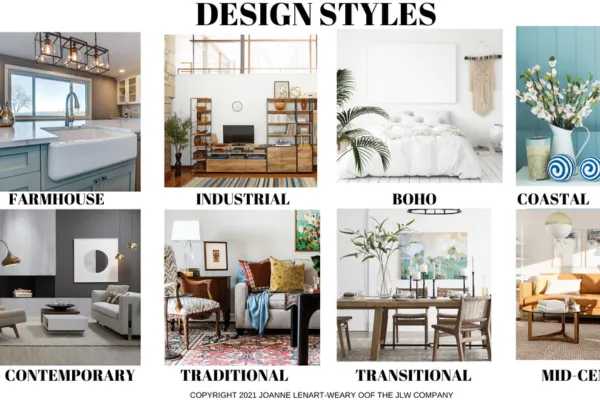
Modern and Mid-Century Modern: Both styles emphasize clean lines, simple forms, and minimal ornamentation. Mid-Century Modern has a slightly more vintage feel, while Modern leans more toward contemporary design. Combining these styles can create a cohesive space that feels both timeless yet edgy.
Scandinavian and Boho: Scandinavian design focuses on functionality, minimalism, and neutral colors, while Boho style embraces bold patterns, vibrant colors, and an eclectic mix of furniture and accessories. They play well together as the simplicity of Scandinavian design doesn't compete with the addition of Bohemian elements, creating an inviting and unique space.
Industrial and Rustic: Both styles celebrate raw, natural materials like wood, metal, and brick. Industrial design often incorporates exposed structural elements and factory-inspired furniture, while Rustic design uses more natural textures, reclaimed materials, and a warm color palette. When combined, these styles can create a space that feels both rugged and cozy, appealing to both a feminine and masculine aesthetic.
Traditional and Transitional: Traditional design is characterized by classic forms, rich colors, and luxurious materials, while Transitional design blends traditional elements with more contemporary touches. Little touches like removing the sofa skirt from a traditional frame, gives it a fresh look. The combination creates a space that feels timeless, fresh, and people friendly. .
Coastal and Farmhouse: Coastal design is inspired by the beach and often incorporates light, airy colors, natural materials, and nautical-themed accents. Farmhouse style, on the other hand, emphasizes practicality, comfort, and a connection to the outdoors. When combined, these styles can create a warm, inviting space that feels casual and relaxed. The modern approach is to avoid classic (easily redundant) elements of that style, such as a ship's wheel or overabundance of beach glass or shells. A little can go a long way.
Always find the common thread that unites the different elements, such as a consistent color scheme or material choices. This will help create a cohesive, harmonious space that results in cohesion, not chaos. .

